These quotes are from the Saints & confirm the formal & actual distinction in God between His essence & energies.
St. Dionysius the Areopagite
| †5605 AM |
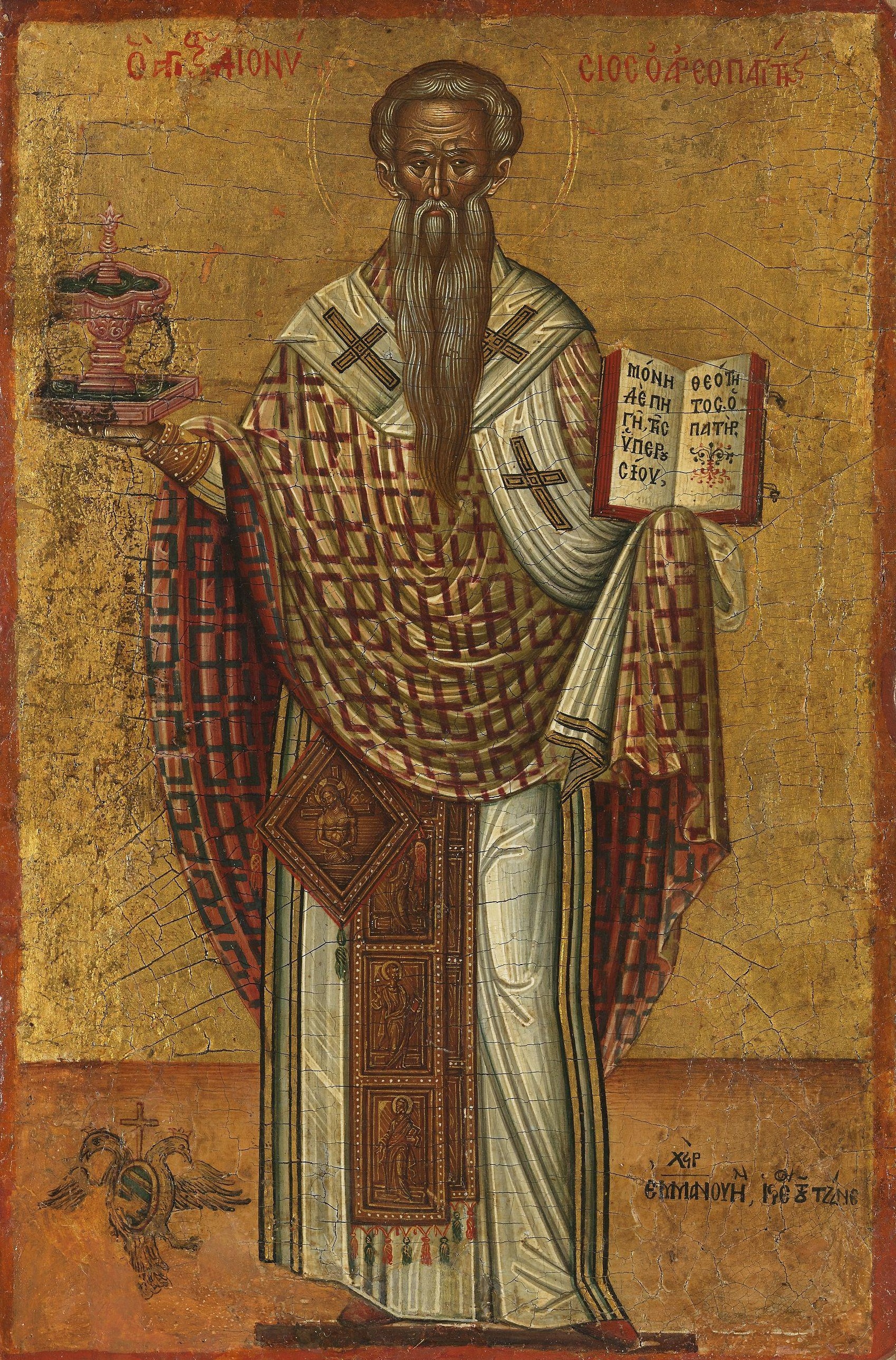
Hieromartyr, disciple of St. Paul (cf. Ac. 17:34), a witness of the repose of the Mother of God, & the second Bishop of Athens:
For, as I said elsewhere, the sacred instructors of our theological tradition call the “divine unions” the hidden & unrevealed sublimities of the super-unutterable & super-unknown isolation; but the “distinctions,” the goodly progressions & manifestations of the deity; &, following the sacred oracles, they mention also properties of the aforesaid union; & again of the distinction, that there are certain specific unions & distinctions. For example, with regard to the divine union, that is, the superessentiality, there is kindred & common to the one-springing Trinity, the superessential sustaining source, the super-divine deity, the super-good goodness, the supreme identity of the whole supreme idiosyncrasy, the oneness above source of one; the unspeakable; the much-speaking, the agnōsía, the comprehended by all, the placing of all, the abstraction of all, that which is above all affirmation & abstraction, the abiding & steadfastness in each other, if I may so speak, wholly super-united & in no part commingled of the one-springing Persons.
- On the Divine Names
St. Cyril of Jerusalem
| †5895 AM |
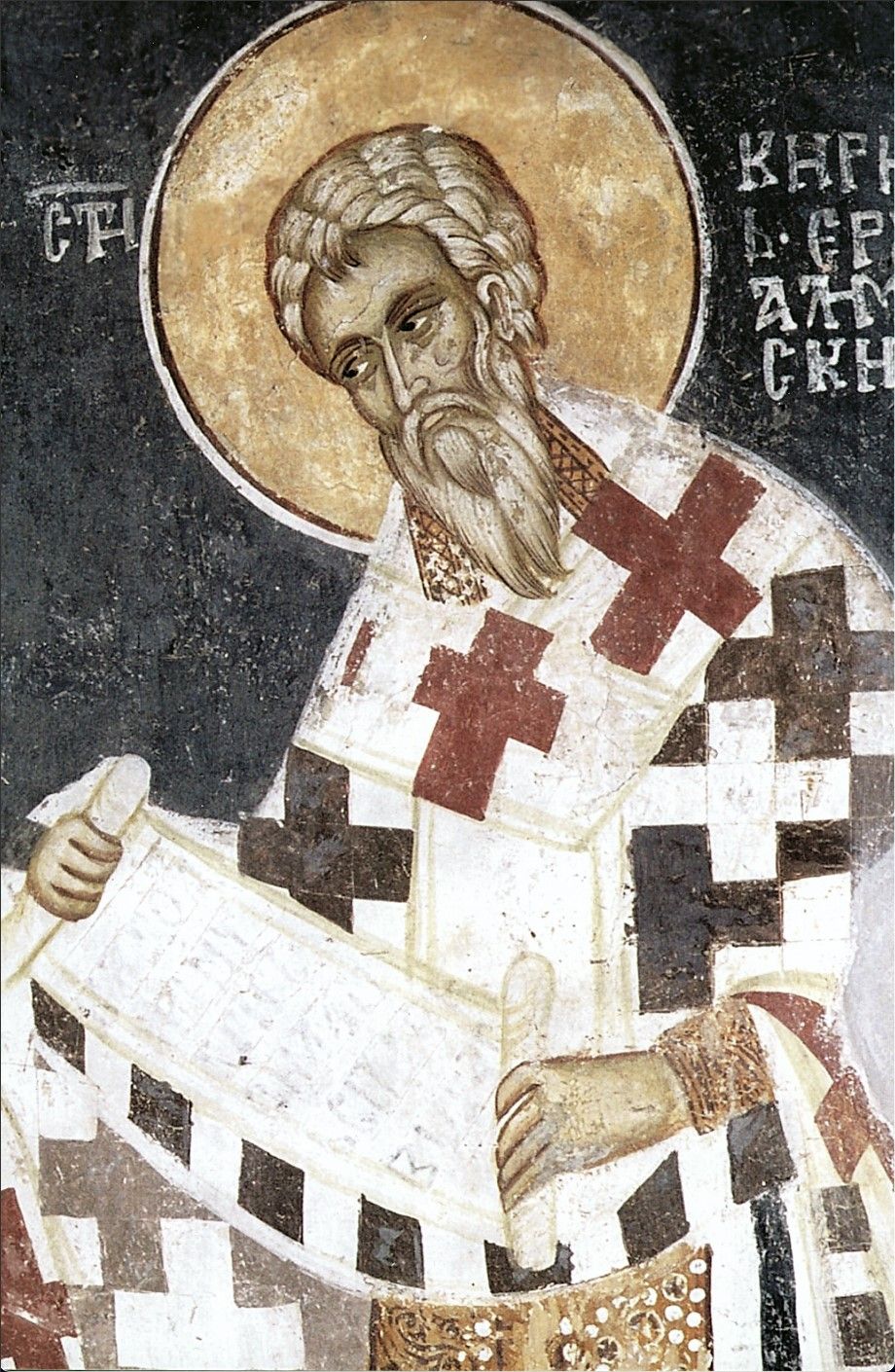
Participant at the Second Œcumenical Council, the Archbishop of Jerusalem, & author of the famous Catechetical Lectures:
The divine nature then it is impossible to see with eyes of flesh: but from the works, which are divine, it is possible to attain to some conception of His power, according to Solomon, who says, “For by the greatness & beauty of the creatures proportionably the Maker of them is seen.”
- Catechetical Lectures
Esaias too, with his majestic voice, says, “The Spirit of God shall rest upon Him, the spirit of wisdom & understanding, the spirit of counsel & might, the spirit of knowledge & godliness; & the spirit of the fear of God shall fill Him,” signifying that the Spirit is one & undivided, but His operations various.
- Catechetical Lectures
St. Basil the Great
| †5888 AM |
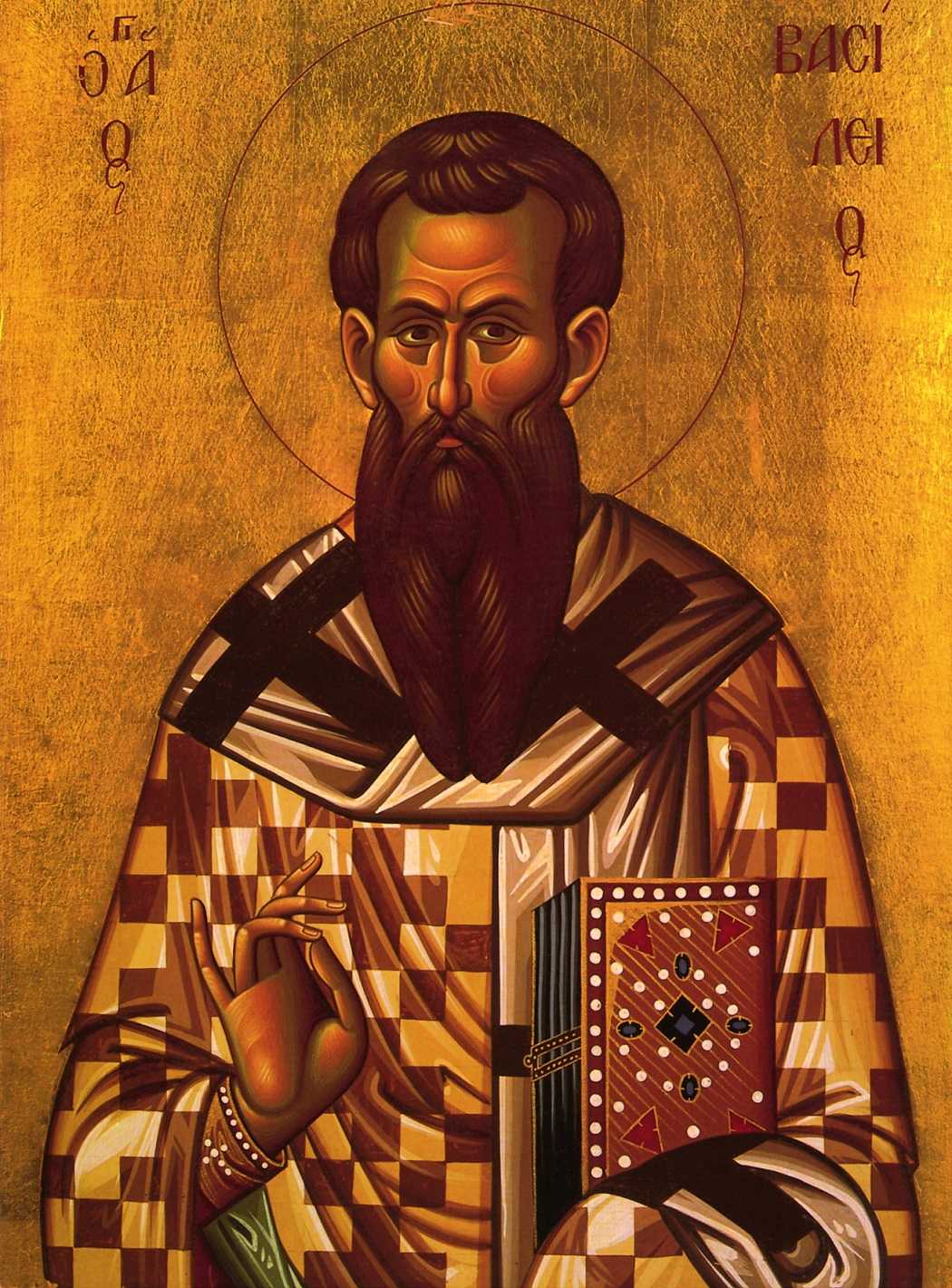
First of the Three Holy Hierarchs, the Archbishop of Cæsarea in Cappadocia, revealer of heavenly mysteries, renowned & bright star, glory & beauty of the Church, brother of SS. Gregory of Nyssa, Peter the Sebaste, & Macrina the Younger, son of St. Emily, & grandson of St. Macrina the Elder:
The divine nature, on the other hand, in all the words which are contrived, remains always inexplicable, as I always teach. We have learned that it is beneficent, judicial, righteous, good, & so on; & so have been taught differences of operations. But we are, nevertheless, unable to understand the nature of the Operator through our idea of the operations. Let anyone give an account of each one of these names, & of the actual nature to which they are applied, & it will be found that the definition will not in both cases be the same. Where the definition is not identical the nature is different. There is, then, a distinction to be observed between the essence, of which no explanatory term has yet been discovered, & the meaning of the names applied to it in reference to some operation or dignity. That there should be no difference in the operations we infer from the community of terms. But, we derive no clear proof of variation in nature, because, as has been said, identity of operations indicates community of nature. If then deity be the name of an operation, we say that the deity is one, as there is one operation of Father, Son, & Holy Spirit.
- Epistles
When all these high attributes have been enumerated, are they all names of one essence? But is there the same mutual force in His awfulness & His loving-kindness, His justice & His creative power, His providence & His foreknowledge, & His bestowal of rewards & punishments, His majesty & His providence? In mentioning any one of these do we declare His essence? … The operations are various, & the essence simple, but we say that we know our God from His operations, but do not undertake to approach near to His essence. His operations come down to us, but His essence remains beyond our reach.
- Epistles
St. Gregory of Nyssa
| †5893 AM |
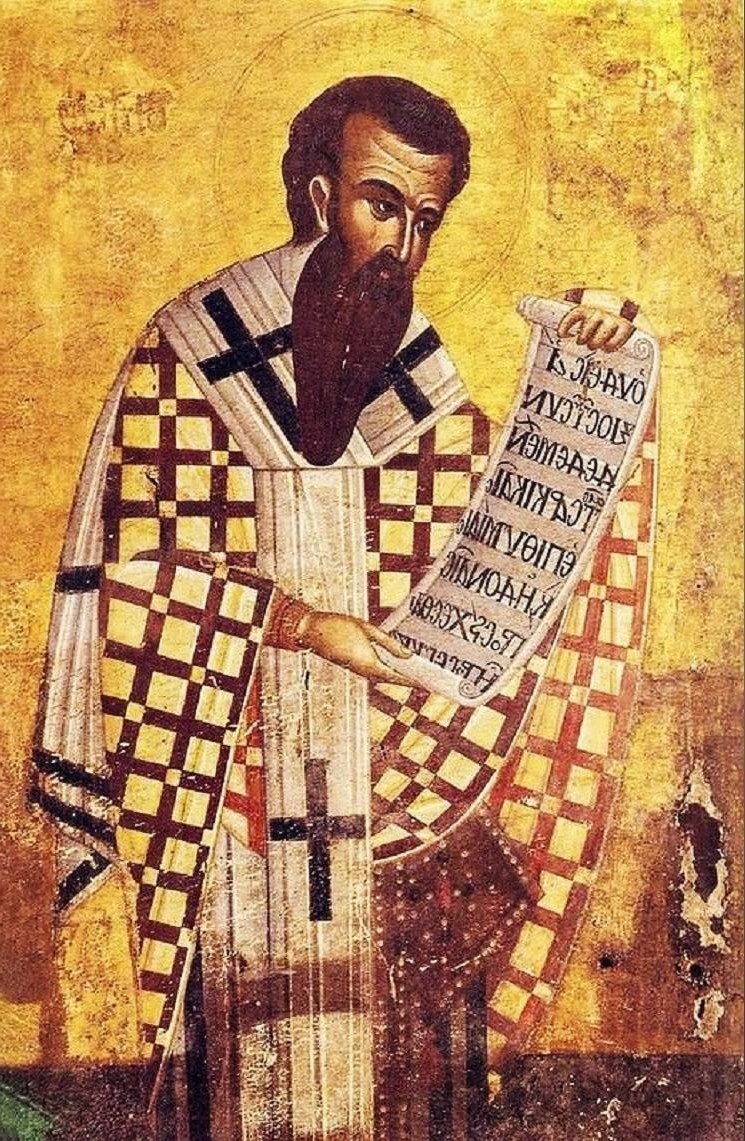
Father of Fathers, a participant at the Second Œcumenical Council, the Bishop of Nyssa in Cappadocia, & brother of St. Basil the Great:
What has been said displays after a fashion the truth of the Lord, Who promised the vision of God to the pure of heart. Nor, again, is Paul a liar when he displays in his own words that he has not seen God nor can see Him. For God Who is by nature beyond our sight is visible in His activities, being perceived in the characteristics that surround Him.
- On the Beatitudes
Similarly, says he, our Lord is in respect to Himself what He is essentially, but when named according to the differences of His operations, He has not one appellation in all cases, but takes a different name according to each notion produced in us from the operation.
- Answer to Eunomius’ Second Book
They say that divinity reveals the nature. But we know that the divine nature has no name which signifies it. But if something is said about it either by human convention or by the divine scriptures, it signifies something about that which surrounds divinity. But the divine nature itself remains unspoken & unuttered; it exceeds all possibility of being revealed by name. So the name divinity shows not the nature of the Spirit, but the power of seeing.
- On the Divinity of the Son & the Spirit
St. Cyril of Alexandria
| †5953 AM |
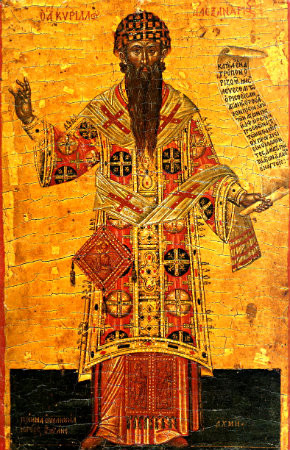
President at the Third Œcumenical Council & the Pope of Alexandria:
Creating belongs to the energy but begetting to the nature. Nature & energy are not identical.
- Thesaurus
If what belongs only to God is absolutely also His essence He will be composed for us out of many essences; for there are many things which belong only to Him by nature & to no other being. For He is King & Lord & Indestructible & Invisible &, in addition, innumerable other things which the divine scriptures say about Him. If, therefore, all things which are with Him lie in the order of essence, why, then, will the simple not be composed?
- Thesaurus
St. Sophronius of Jerusalem
| (†6153 AM) |
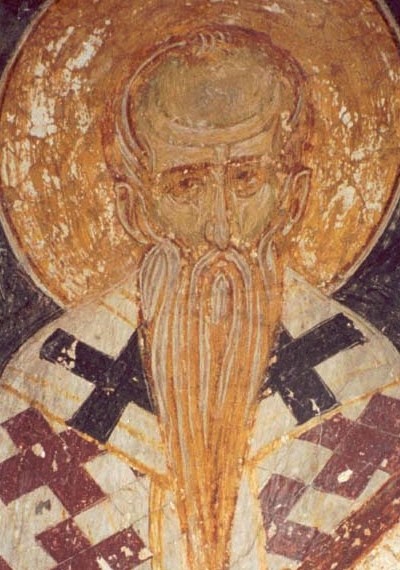
Patriarch of Jerusalem & author of the Life of St. Mary of Ægypt:
When the holy man [John the Forerunner] has done this, straightaway he sees the heavens open & the Spirit descending thence from the Father, not in Its own essence—for that is beyond the power of the eyes of man—but flying down in the form of a dove & lighting on Christ Himself, as being of like kind & kin & sharing the same divinity.
- Homily on the Baptism of Christ
St. Maximus the Confessor
| †6171 AM |
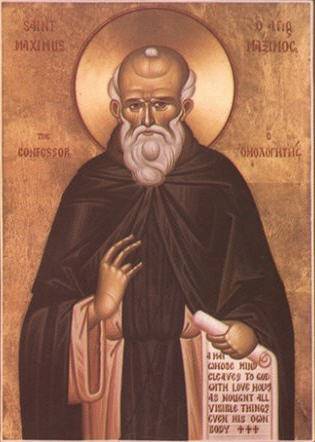
Vendicated by the Sixth Œcumenical Council & the disciple of St. Sophronius of Jerusalem:
Being led by the Truth to true religion, they might together with us readily confess that the word “unbegotten” signifies only that the Father is without origin—themselves seeing that, were they to persist in asserting their doctrine that the unbegotten is the essence of God, they would be completely forced to maintain that the incorporeal, & the unoriginate, & the immortal, & the immutable, & the incorruptible, are also by necessity the essence of God, along with whatever else we say that God is by means of privative negations on account of His transcendence. Being forced to be consistent with their own principles, they would be exposed & convicted for introducing many essences of God, & not one.
- Ambigua
Participable beings in which participant beings participate by grace, such as goodness & all that is included in the principle of goodness, are perhaps works of God which did not begin to be in time. Briefly, these include all life, immortality, simplicity, immutability & infinity, & all the other qualities that contemplative vision perceives as substantively appertaining to God. These are works of God, yet not begun in time. … God is infinitely above all beings, whether participant or participable. For whatever belongs to the category of being is a work of God, even though participant beings had a temporal origin, whereas participable beings were implanted by grace among things that come into existence in time. In this way participable beings are a kind of innate power clearly proclaiming God’s presence in all things.
- “Two Centuries on Theology” in: the Philocalia
But all the things that are around the essence do not disclose what the essence itself is, but what it is not, such as not being created, not having a beginning, not being finite, not being corporeal, & any other such things that are around the essence, & indicate what it is not, but not what it is. This is true even of the principles of providence & judgment, according to which the universe is wisely governed, & with which the harmonious contemplation of nature around God is said to take place, which shows only by analogy that its Creator exists. To be sure, negations stand in opposition to affirmations, becoming amicably interwoven with each other around God, each entering into & reciprocally complementing the other. Thus the negative statements indicate not that the Divine is something, but rather what It is not, & these are in compliance with the affirmations around That something (which the Divine is not). The affirmations, which indicate solely that the Divine exists, but not in anyway what It is, are united with the negations around That something (which the Divine is not). To the extent that the negations & affirmations are taken in relation to each other, they express opposition through antithesis, but when they are referred to God, they reveal their intimate relation by the manner in which the two extremes mutually condition each other.
- Ambigua
He who is deified through grace will be everything that God is, without possessing identity of essence.
- Ambigua
There is a single energy of God & the Saints … they are living icons of Christ, being the same as He is, by grace rather than by assimilation.
- Ambigua
St. John of Damascus
| †6289 AM |
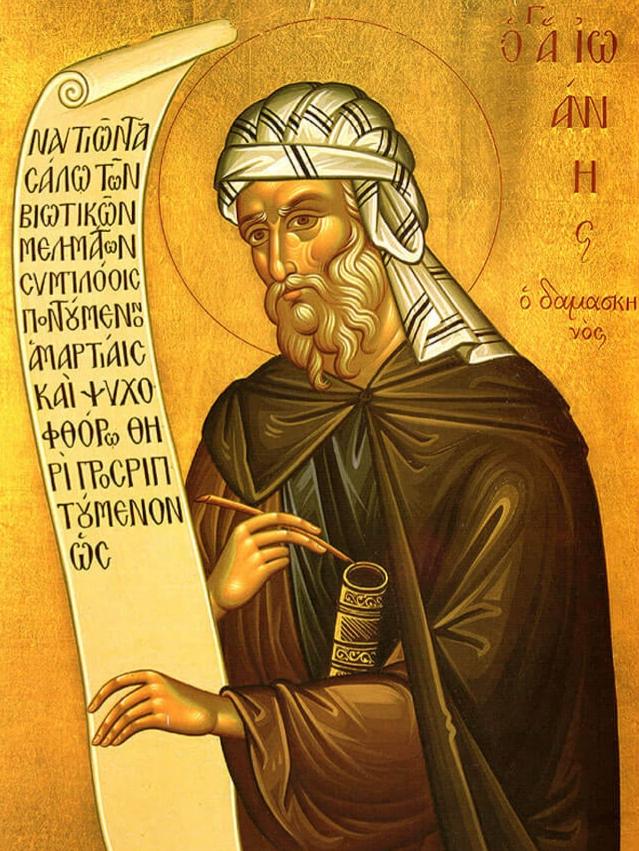
Chrysorroas, vendicated by the Seventh Œcuemnical Council, author of the Octoechos, & brother of St. Cosmo the Hymnographer:
All this, however, is by no means indicative of His essence—no more than is the fact of His being unbegotten, unoriginate, immutable, & incorruptible, or any of those other things which are affirmed of God or about Him. God, then, is limitless & incomprehensible, & then His limitlessness & incomprehensibility is all that can be understood about Him. All that we state affirmatively about God does not show His nature, but only what relates to His nature. And, if you should ever speak of good, or justice, or wisdom, or something else of the sort, you will not be describing the nature of God, but only things relating to His nature.
- “On the Orthodox Faith” in: the Fount of Knowledge
God is simple & uncompounded. But that which is composed of several different things is compounded. Consequently, should we say that the increate, unoriginate, incorporeal, immortal, eternal, good, creative, & the like are essential differences in God, then, since He is composed of so many things, He will not be simple but compounded, which is impious to the last degree. Therefore, one should not suppose that any one of these things which are affirmed of God is indicative of what He is in essence. Rather, they show either what He is not, or some relation to some one of those things that are contrasted with Him, or something of those things which are consequential to His nature or operation.
- “On the Orthodox Faith” in: the Fount of Knowledge
Now we also say that in our Lord Jesus Christ there are two operations. For, in so far as He was God & consubstantial with the Father, like the Father He had the divine operation; in so far as He was made man & consubstantial with us, He had the operation of the human nature. However, one must know that operation is one thing, what is operative is another, which is operated another, & still another the operator. Operation, then, is the efficacious & substantial motion of the nature. And that which is operative is the nature from which the operation proceeds. That which is operated is the effect of the operation. And the operator is the one who performs the operation; the person, that is.
- St. John of Damascus, “On the Orthodox Faith” in: the Fount of Knowledge
St. Gregory Palamas
| †6868 AM |
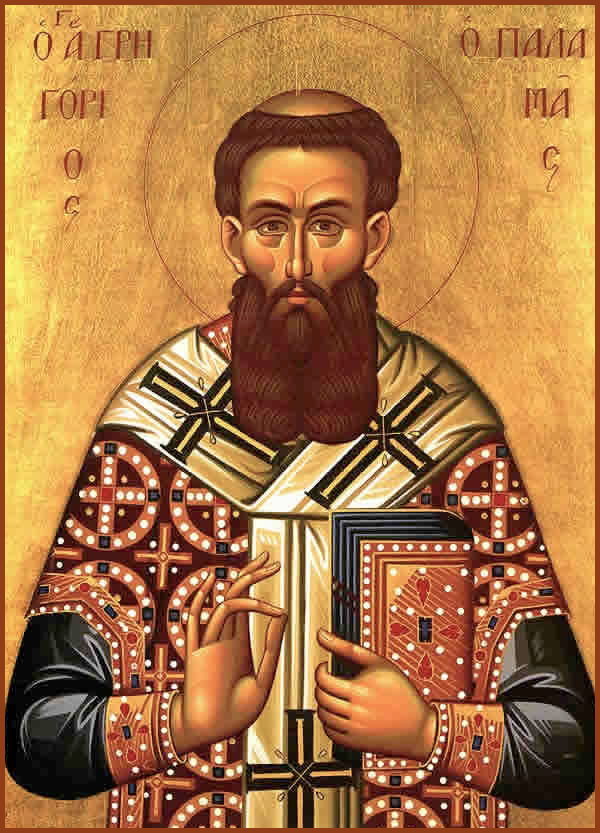
Second of the Pillars of Orthodoxy, vendicated by the Ninth Œcumenical Council, unerring teacher of the Church, & the Archbishop of Thessalonica:
Thus that which is created is not God’s energy—this is impossible—but what is effected & accomplished by the divine energy. This is why St. John of Damascus teaches that the energy, although distinct from the divine nature, is also an essential, that is to say, a natural activity of that nature. Since, then, it is the property of the divine energy to create, as St. Cyril has said, how could this energy be something created, unless it was activated by another energy, & that energy in turn by still another, & so on ad infinitum? In this way we would always be looking for the uncreated source of the energy.
- “Topics of Natural & Theological Science” in: the Philocalia
If the energies of God do not in any respect differ from the divine essence, then neither will they differ from one another. Therefore God’s will is in no way different from His foreknowledge, & consequently either God does not foreknow all things—because He does not will all that occurs—or else He wills evil also, since He foreknows all. This means either that He does not foreknow all things, which is the same as saying that He is not God, or that He is not good, which is also the same as saying that He is not God. Thus God’s foreknowledge does differ from His will, & so both differ from the divine essence. If the divine energies do not differ from one another, then God’s creative power is not distinct from His foreknowledge. But in that case, since God began to create at a particular moment, He also began to foreknow at abparticular moment. Yet if God did not have foreknowledge of all things before the ages how could He be God? If God’s creative energy does not differ in any respect from divine foreknowledge, then created things are concurrent with God’s foreknowledge. Thus because God unoriginately has foreknowledge & what is foreknown is unoriginately foreknown, it follows that God creates unoriginately, & therefore that created things will have been created unoriginately. But how shall He be God if His creatures are in no way subsequent to Him? If God’s creative energy in no respect differs from His fore knowledge, then the act of creating is not subject to His will, since His foreknowledge is not so subject. In that case God will create, not by an act of volition, but simply because it is His nature to create. But how will He be God if He creates without volition?
- “Topics of Natural & Theological Science” in: the Philocalia
One can find the term ’nature’ applied also to natural attributes, both in the case of created beings & in the case of God. Thus St. Gregory the Theologian says somewhere in his poems, “It is the nature of my King to bestow blessedness.” Now bestowing is not the nature of anything; it is, rather, the natural attribute of one who is beneficent. Similarly, with regard to fire one can say that its nature is to ascend upwards & to cast light upon those who behold it. Yet the motion in itself is not the nature of fire, nor is the production of light; rather its nature is the origin of the motion. Hence natural attributes are also called nature. This is confirmed by the great Dionysius when he says somewhere, “It is the nature of the Good to bring forth & to save,” meaning that these acts are attributes of the divine nature. Thus when you hear the fathers saying that God’s essence is imparticipable, you should see that they refer to the essence that does not depart from itself & is unmanifest. Again, when they say that it is participable, you should see that they refer to the procession, manifestation & energy that are God’s natural attributes.
- “Topics of Natural & Theological Science” in: the Philocalia
To refute both groups it is enough to show that not everything predicated of God is said with regard to His essence; it can be said relatively, that is, with relation to something that is not God’s essence. For example, the Father is spoken of in relation to the Son, for the Son is not the Father. God is called Lord in relation to the subject creation, for God is Lord over beings that are in time & in the eternal age, & also Lord over the ages themselves. But this dominion is an uncreated energy of God, distinct from His essence in that it is said in relation to something else, something which He Himself is not.
- “Topics of Natural & Theological Science” in: the Philocalia
But how does the energy, though it is seen to be in God, not introduce composition into God? Because only God possesses completely impassible energy: He alone acts without being acted upon. He does not come into existence, nor does He change.
- “Topics of Natural & Theological Science” in: the Philocalia
But to create & to energize can in the truest sense be predicated of God alone; for only God creates. He does not come into existence nor with respect to His essence is He acted upon. He alone through all things creates each one. He alone creates from absolute nothingness, since He possesses energy that is all-powerful. With respect to this energy He can be referred to in relation to creation & possesses potentiality. For He Himself in His own nature is not capable of being affected by anything at all, but if He wishes He is capable of adding to His creations. For God in His essence to be capable of being affected, of possessing or acquiring something, would denote weakness. But for God through His energy to be capable of creating, & of possessing & adding to His creations whenever He wishes, is a token of divinely fitting & almighty power.
- “Topics of Natural & Theological Science” in: the Philocalia
Those who assert that God is only essence, with nothing to be seen in Him, fabricate a God Who has neither creativity & energy nor relation. But if He Whom they suppose to be God does not possess these properties, then He is neither active nor Creator, nor does He possess an energy; & neither is He Principle, Creator & Master, nor is He our Father by grace. For how could He be these things if relation & creativity are not to be envisaged in His essence? Furthermore, if relation is not to be envisaged in God’s essence, the tri-hypostatic character of the Deity is also abolished. But He who is not tri-hyposlatic is not the Master of all or God. Thus those who hold the views of Barlaam & Acindynus are atheists.
- “Topics of Natural & Theological Science” in: the Philocalia
God also possesses that which is not essence. Yet because it is not essence it is not on that account an accident. For that which not only does not pass away but which also neither admits nor induces in itself the slightest increase or decrease, cannot be included among accidents. But the fact that it is neither an accident nor essence does not mean that it has no existence: it exists & it truly exists. It is not an accident, because it is altogether changeless. But again it is not an essence, because it is not among those things that are self-subsistent. … To speak in accord with all the theologians: if God creates by will & not simply because it is His nature to do so, then to will is one thing & natural being is another. If this is so, it means that God’s volition is other than the divine essence. Does it follow from this that because in God the will is other than the nature & is not an essence it therefore does not exist at all? Certainly not: it does exist & it pertains to God, who possesses not only essence but also a will with which He creates.
- “Topics of Natural & Theological Science” in: the Philocalia
According to the true faith of God’s Church which by His grace we hold, God possesses inherent energy that makes Him manifest & is in this respect distinct from His essence. For He foreknows & provides for inferior beings; He creates, sustains, rules & transforms them according to His own will & knowledge. In this way it is clear that He possesses an individual state of being, & that He is not simply essence lacking actual existence. But since all these energies are to be seen not in one but in three Persons, God is known to us as one essence existing in three individual states of being or Hypostases. But the followers of Acindynus, by asserting that God does not have inherent energy that makes Him manifest & is in this respect distinct from His essence, are saying that God does not possess an individual state of being, & they entirely deprive the tri-hypostatic Lord of actual existence.
- “Topics of Natural & Theological Science” in: the Philocalia