Cadmus the Phonœcian taught sixteen letters to the Greeks: α β γ δ ε ζ ι κ λ μ ν ο π ρ σ τ φ. Evidently ϛ ϡ ϟ were later received as numerals. Despite this disordered reception, all except υ ϡ are correctly ordered.
Palamedes, son of Nauplius, added three letters: η χ ω. But some say Cadmus did not teach ζ, rather Palamedes added it. Aristotle says Epicharmus, instead of Palamedes, added these.
Simonides the Lyricist added three letters: θ ξ ψ, & Pythagoras, some say, added one letter: υ, but others say rather Simonides also added this.
Letters
| Greek | Latin | ||
|---|---|---|---|
| α | ἄλφα | a | álpha |
| β (ϐ) | βῆτα | b | bē̂ta |
| γ | γάμμα | g | gámma |
| δ | δέλτα | d | délta |
| ε | ἒψιλόν (εἶ) | e | èpsilón (ī̂) |
| ζ | ζῆτα | z | zē̂ta |
| η | ἦτα | ē | ē̂ta |
| θ (ϑ) | θῆτα | th | thē̂ta |
| ι | ἰῶτα | i | iō̂ta |
| κ (ϰ) | κάππα | c | cáppa |
| λ | λάμβδα | l | lámbda |
| μ | μῦ | m | mŷ |
| ν | νῦ | n | nŷ |
| ξ | ξεῖ | x | xī̂ |
| ο | ὂμικρόν (οὖ) | o | òmicrón (û) |
| π (ϖ) | πεῖ | p | pī̂ |
| ρ (ϱ) | ῥῶ | r | rhō̂ |
| σ (ϲ) | σῖγμα (σάν) | s | sîgma (sán) |
| τ | ταῦ | t | taû |
| υ | ὖψιλόν (ὑ) | y | ŷpsilón (hy) |
| φ | φεῖ | ph | phī̂ |
| χ | χεῖ | ch | chī̂ |
| ψ | ψεῖ | ps | psī̂ |
| ω | ὦμέγα (ὦ) | ō | ō̂méga (ō̂) |
- Simple (psilón) was appended to the names of ε & υ distinguish them from the complex αι & οι.
- Lesser & greater (micrón & méga) were appended to the names of ο & ω to distinguish them.
- Like Latin, Phœnician is written for capitals.
There are three additional letters only used now as numerals:
| Greek | Latin | |
|---|---|---|
| ϛ | ἐπίσημον | epísēmon |
| ϟ | κόππα | cóppa |
| ϡ | σαμπί | sampí |
Further, the following digraphs are translated thus:
| Greek | Latin |
|---|---|
| αι | æ |
| αυ | au |
| γγ | ng |
| γκ | nc |
| γξ | nx |
| γχ | nch |
| ει | ī |
| ευ | eu |
| ηυ | ēu |
| οι | œ |
| ου | u |
| υι | ui |
| ωυ | ōu |
- When translating from Greek to Latin names:
- -ας is translated as -us
- -ιοn is translated as -ium
- -ρος is translated as -er
- -ων is translated as -o
Ligatures
| Ligature | Meaning |
|---|---|
| ϗ | καὶ |
| ȣ | ου |
| ϛ | στ |
More which have not digital characters yet:
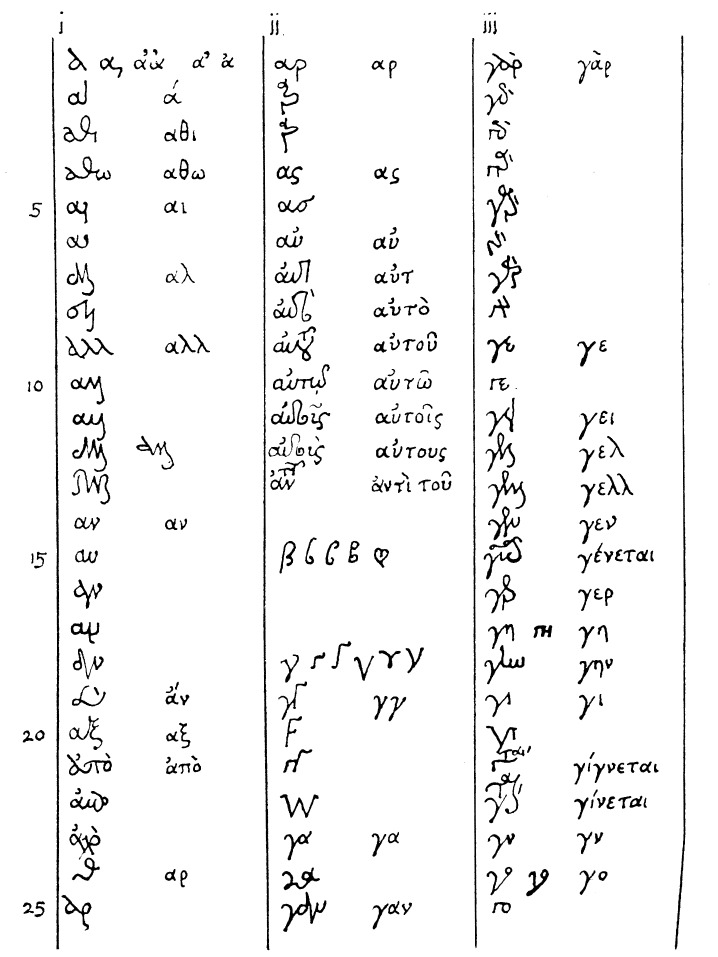
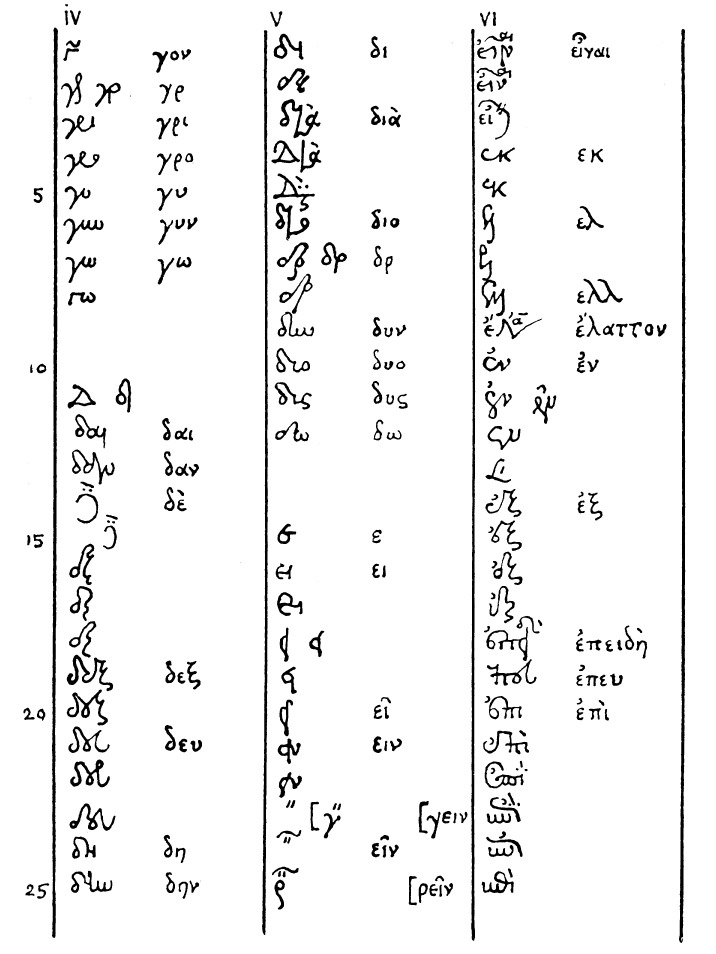
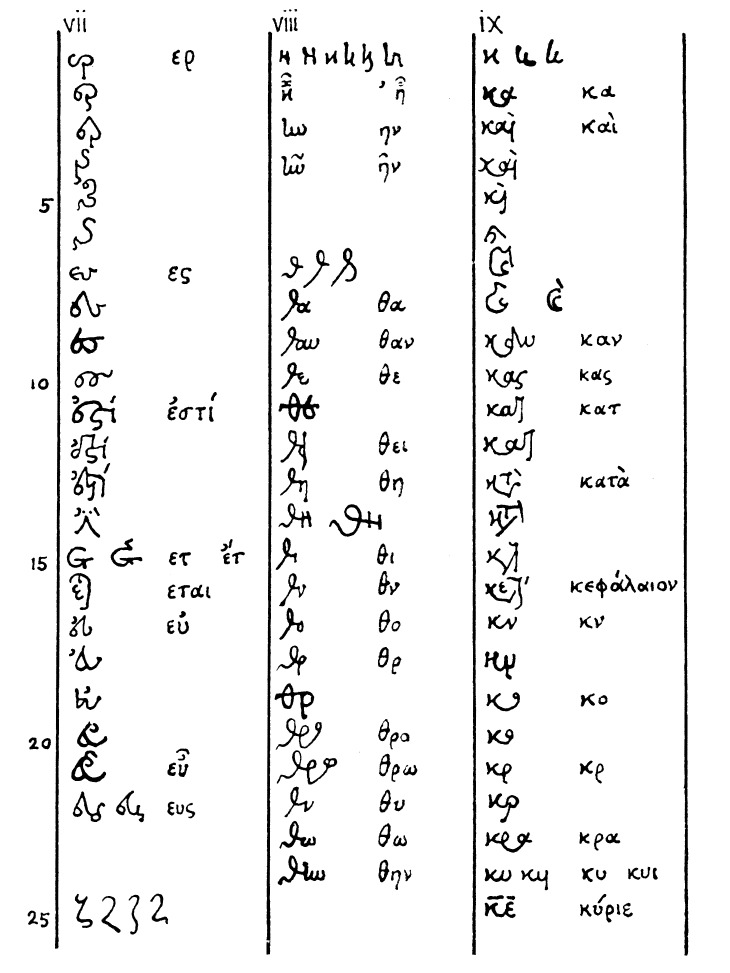
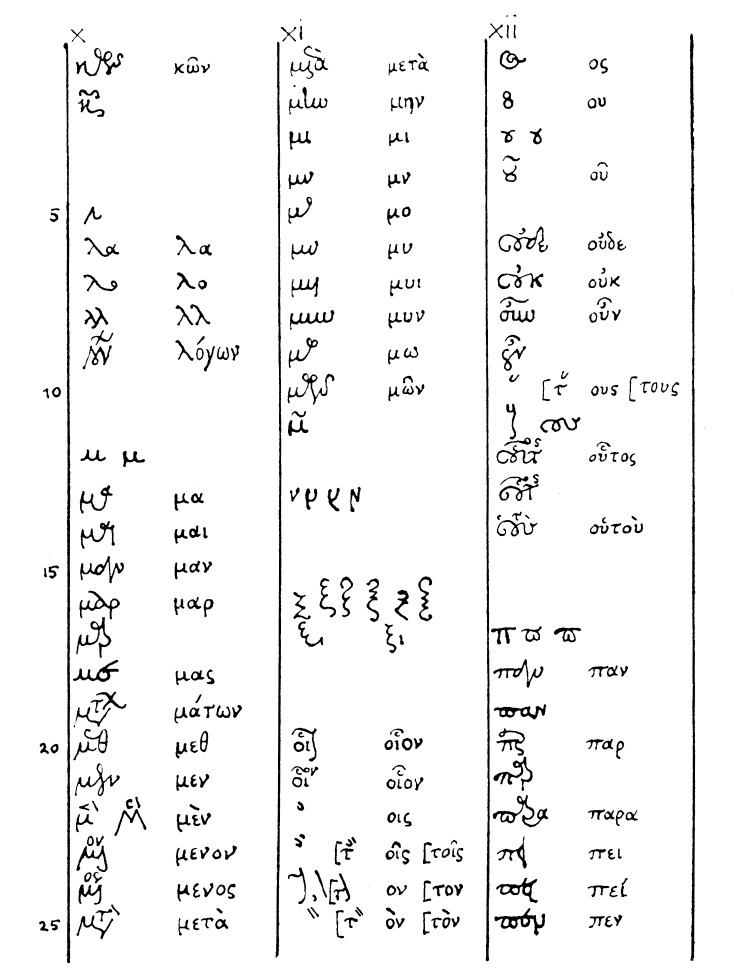
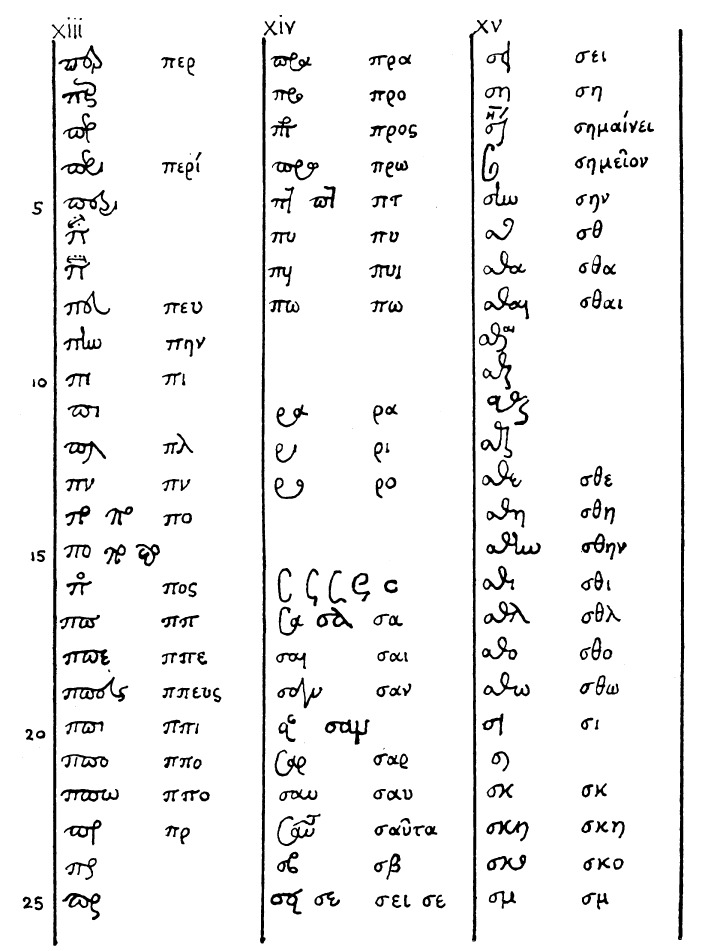
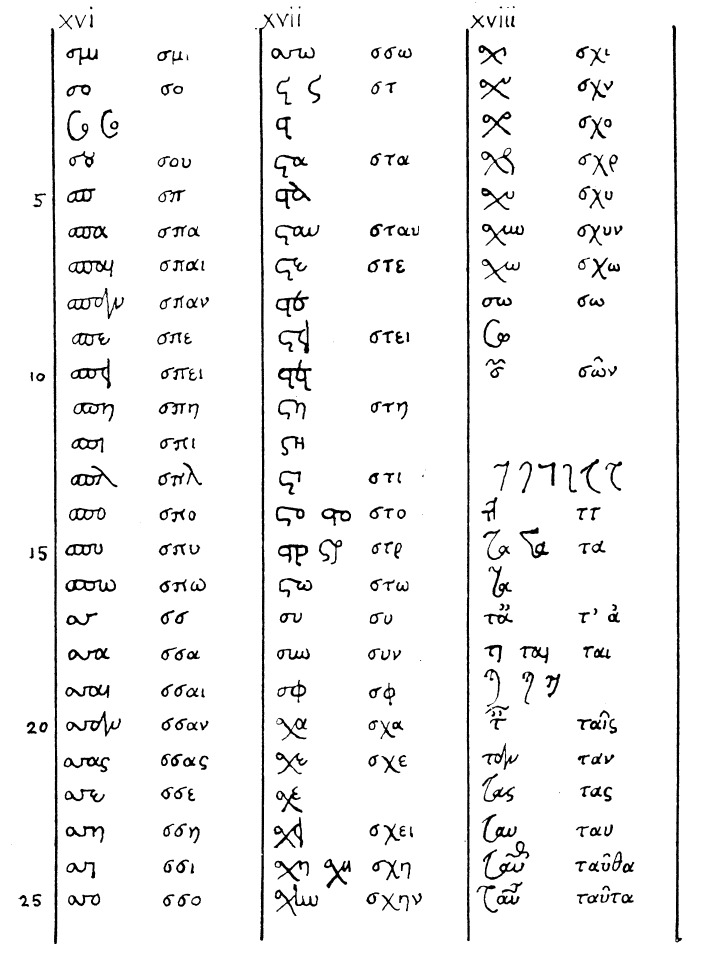
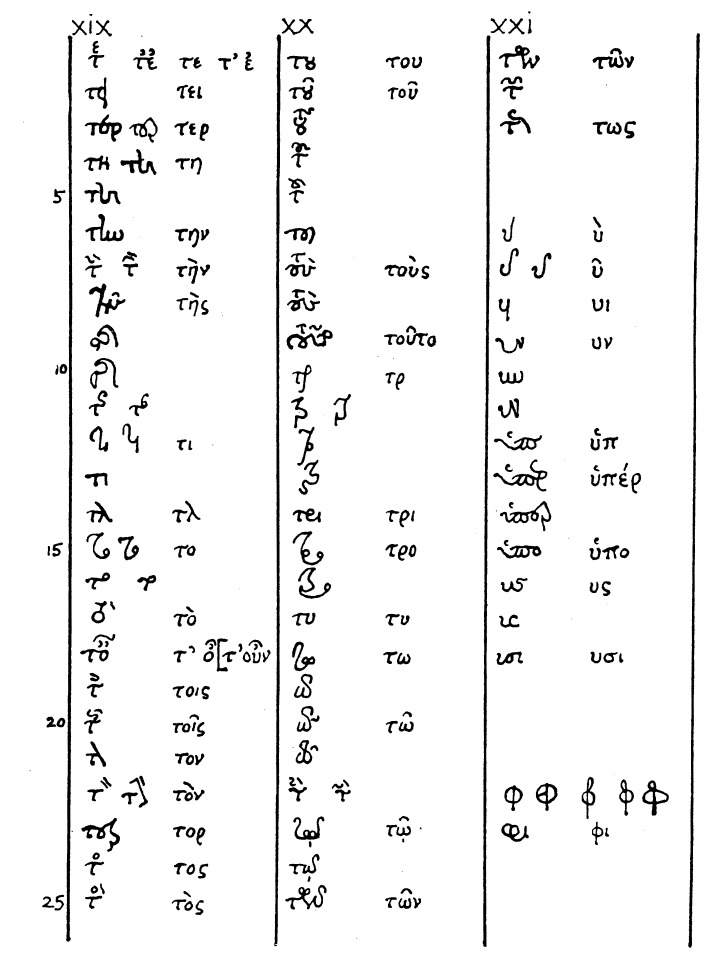
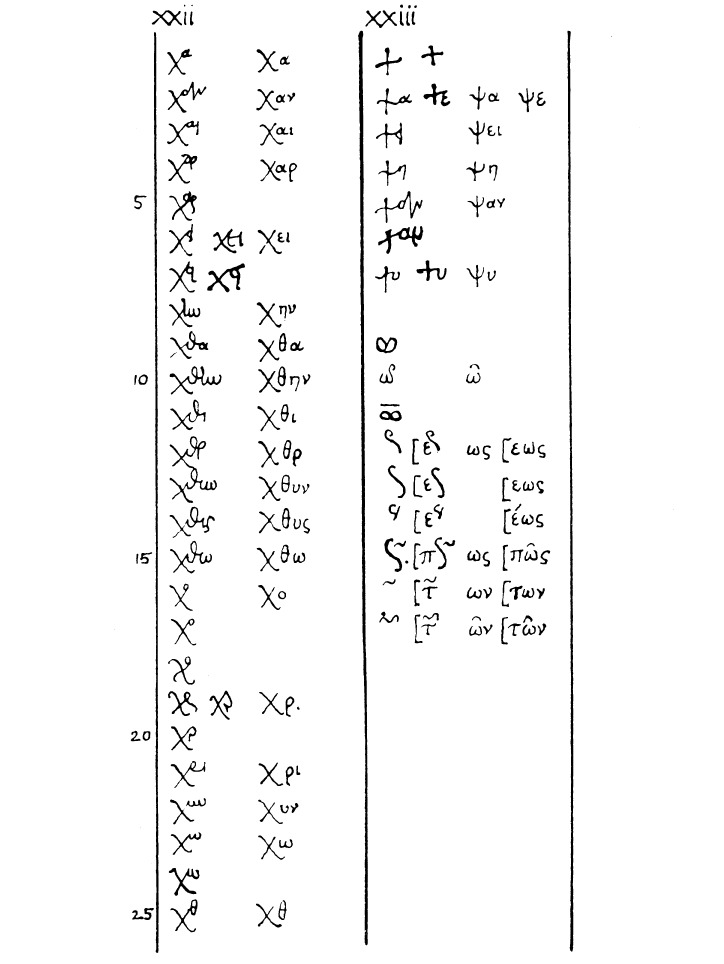
Pronunciation
| Letter | Sound |
|---|---|
| α | a |
| αυ | av af |
| β | v |
| γ | g |
| γγ | g ng |
| γκ | c ngc |
| γξ | cs ngcs |
| γχ | ch ngch |
| δ | ð |
| ε αι | e |
| ευ | ev ef |
| ζ | z |
| η ι ει οι υ υι | i |
| θ | th |
| κ | c |
| λ | l |
| μ | m |
| μπ | b mb |
| ν | n |
| ντ | d nd |
| ξ | cs |
| ο ω | o |
| ου | u |
| π | p |
| ρ | r |
| σ | s |
| τ | t |
| φ | f |
| χ | ch |
| ψ | ps |
The letters αυ & ευ are pronounced af & ef before a mute—e.g θ, τ—but av & ev before a semivowel or vowel—e.g. β, α.
The pairs of letters γγ γκ γξ γχ are pronounced g or c or cs or h if at the beginning of a word.
If the terminal vowel of a word is abbreviated for the initial vowel of the second word, & this vowel is aspirated, & the terminal consonant of the word which has the abbreviated vowel is κ, π, or τ, then it is transformed into a χ, φ, or θ.
Accent
| Greek | Latin | Meaning |
|---|---|---|
| ´ | ´ | Stress vowel. |
| ῀ | ˆ | Stress vowel. |
| ` | ˋ | Destress vowel. |
| ῾ | h | Aspirate vowel. |
| ᾿ | De-aspirate vowel. | |
| ¨ | ¨ | Separate vowel. |
The oxī̂a is placed on short vowels, but the perispōménē on long vowels.
Punctuation
| Greek | Latin | Meaning |
|---|---|---|
| . | . | Pause. |
| · | ; | Pause or breath. |
| : | : | Pause or breath. |
| ⸒ | , | Breath. |
| ’ | ' | Abbreviation. |
| ‿ | - | Union. |
| — | — | Interruption. |
| ; | ? | Question. |
| ! | ! | Exclamation. |
| () | () | Insertion. |
Aristophanes of Byzantium invented accent, breath, & punctuation marks. Previously η was written as ⊢ or ⊣ to denote breaths.
Derivations
| Hebrew | Phœnician | Greek | Latin |
|---|---|---|---|
| ࠀ | Α | α | a |
| ࠁ | Β | β | b |
| ࠂ | Γ | γ | c |
| ࠃ | Δ | δ | d |
| ࠄ | Ε | ε | e |
| ࠅ | Υ | ϛ υ | f u |
| ࠆ | Ζ | ζ | z |
| ࠇ | Η | η | h |
| ࠈ | Θ | θ | |
| ࠉ | Ι | ι | i |
| ࠊ | Κ | κ | k |
| ࠋ | Λ | λ | l |
| ࠌ | Μ | μ | m |
| ࠍ | Ν | ν | n |
| ࠎ | Ξ | ξ | x |
| ࠏ | Ο | ο ω | o |
| ࠐ | Π | π | p |
| ࠑ | Ͳ | ϡ | |
| ࠒ | Ϙ | ϟ | q |
| ࠓ | Ρ | ρ | r |
| ࠔ | Σ | σ | s |
| ࠕ | Τ | τ | t |
| φ | |||
| χ | |||
| ψ |
- In Latin, these capitals are more cursive or otherwise variant:
- C for Γ.
- D for Δ.
- L for Λ.
- X for Ξ.
- P for Π.
- Q for Ϙ.
- R for Ρ.
- S for Σ.
- The Latin G seems to be a ligature of CΓ.
Ægyptian
Isis—i.e. Io, daughter of the Argive king Inachus–after she married Telegonus, taught a form of Phœnician letters to the Ægyptians. Later, they adopted Greek letters for writing, but added six letters:
| Ægyptian | Latin | ||
|---|---|---|---|
| ϣ | σαι | š | sǽ |
| ϥ | φαι | ph | phǽ |
| ϩ ϧ | ἡωρι | h | hēṓri |
| ϫ | γί | ž | gí |
| ϭ | χί | č | chí |
| ϯ | τι | ti | ti |
- For Greek:
- Write σχ for ϣ.
- Write τζ for ϫ.
- Write τσ for ϭ.
The pronounciation of each:
| Letter | Sound |
|---|---|
| ϣ | ci |
| ϥ | f |
| ϩ ϧ | h |
| ϫ | gi |
| ϭ | tci |
| ϯ | ti |